
Can a Stone Veneer Fireplace Be Installed Over an Existing Brick Fireplace?
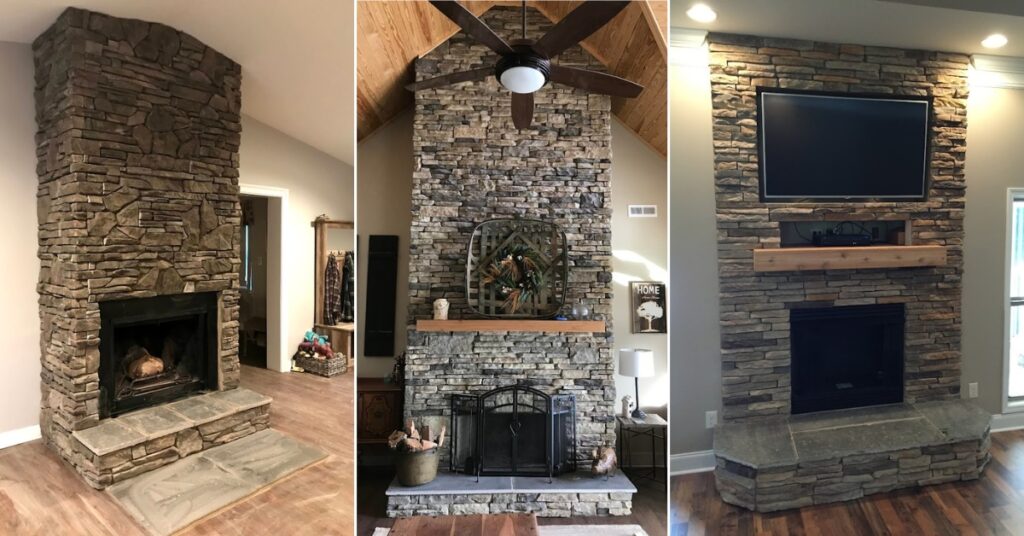
Table of Contents
Yes, a stone veneer fireplace can be installed over an existing brick fireplace, and it’s one of the most effective ways to update a dated hearth without the cost or complications of complete demolition. A stone veneer fireplace uses thin slices of natural or manufactured stone to create the appearance of a full masonry build, offering homeowners a modern, textured, and high-end design at a more manageable price point.
In this guide, we’ll explain what stone veneer is, how it’s installed, why it’s ideal for covering old brick, and when to call a professional for help with your fireplace remodel.
What Is Stone Veneer?
Stone veneer is a thin, lightweight material that mimics the look and feel of natural stacked stone. It comes in two main types: natural stone veneer, which is cut directly from natural stone, and manufactured veneer, which is crafted from molded cement blends and minerals that accurately replicate the texture of natural stone.
Both options offer impressive realism, deep dimension, and a wide range of colors and profiles that suit rustic, traditional, or modern interior styles. Because stone veneer weighs significantly less than full-thickness masonry, it can be installed on existing surfaces like drywall, concrete, or brick without requiring structural reinforcement. This versatility is what makes stone veneer one of the most popular choices for fireplace remodels today.
Can You Install Stone Veneer Over an Existing Brick Fireplace?
Absolutely! Installing stone veneer over an existing brick fireplace is not only possible but also a common practice, especially for homeowners looking to refresh their fireplaces without tearing out structural brickwork. This approach is highly effective because brick provides a strong, stable base that can support veneer when properly prepared.
Instead of demolishing the entire surround, our team can clean the brick, repair any cracks, and apply a scratch coat and metal lath to create a textured surface that securely holds the stone veneer. This method minimizes dust, reduces labor time, and avoids structural disruption, all while delivering a dramatic visual transformation.
Installing stone veneer over brick is also one of the most cost-efficient ways to modernize a fireplace. Because the original structure remains intact, you save on demolition costs, disposal fees, and potential reconstruction work. The process maintains the integrity of your fireplace while giving it a completely new, customized appearance. Professional installation ensures proper mortar adhesion, correct spacing, heat-safe materials around the firebox, and long-term stability, all key factors in achieving a flawless, long-lasting fireplace upgrade.
Why Homeowners Install Stone Veneer Over an Existing Brick Fireplace
Upgrading to a stone veneer fireplace offers a wide range of practical and aesthetic benefits. Below, we break down the most common reasons homeowners make the switch.
It’s More Affordable Than Full Demolition
Tearing out a brick fireplace involves demolition crews, debris removal, potential structural modifications, and extensive cleanup. Stone veneer avoids all of that by using the existing brick as a base. This dramatically reduces labor costs and allows more of your budget to go toward design features, premium stone styles, or a new mantel rather than structural work. Homeowners appreciate getting the high-end look of masonry without the high-end reconstruction cost.
Faster Installation With Less Mess
Demolition generates dust, debris, and noise – often spreading into nearby rooms. Installing stone veneer over brick eliminates this entire step. Once the brick is cleaned and prepped, veneer installation moves quickly and cleanly, resulting in less disruption to your home and a faster turnaround time to enjoy your updated fireplace. Most projects can be completed in days rather than weeks, making it one of the most convenient remodeling options.
Works With the Existing Structure
Your existing brick fireplace already has the strength and heat resistance needed for a safe installation. Because stone veneer is lightweight, it does not require the same structural support as full-thickness stone. This makes the installation straightforward and minimizes the risk of unexpected construction issues. In many cases, even older brick fireplaces can support stone veneer once minor repairs or surface preparations are completed.
Instantly Modernizes the Look of Your Home
Stone veneer delivers a dramatic visual upgrade, replacing dated red or painted brick with a rich, textured, dimensional finish. Whether you prefer a rustic stacked stone, a sleek contemporary ledgestone, or something in between, veneer gives you endless options to match the surrounding décor. Because fireplaces often anchor a living space, updating the material can transform the room’s overall feel.
Offers Endless Design Possibilities
With dozens of color palettes, stone shapes, thicknesses, and layout patterns, stone veneer offers far more customization than traditional brick. Homeowners can choose from modern grays, natural earth tones, rugged stone textures, or smooth contemporary profiles. Designers frequently pair veneer with floating mantels, built-ins, hearth extensions, or TV placements to create a fully coordinated feature wall.
What to Expect During a Stone Veneer Installation
Installing a stone veneer fireplace is a multi-step process designed to ensure secure adhesion, proper heat resistance, and a clean, professional finish. Before work begins, our contractors will evaluate the fireplace to assess the condition of the brick, the stability of the mortar joints, and any areas requiring repair.
Once the surface is prepped, you can expect the following steps:
Surface cleaning and prep – The installer removes dust, soot, grease, and loose debris to ensure a strong bond.
Brick repair if needed – Cracked, loose, or deteriorated bricks are stabilized so the veneer has a solid foundation.
Applying mortar or bonding agents – A bonding layer is added to help the scratch coat grip the brick.
Adding a scratch coat – A layer of mortar is troweled over the surface and scored to create texture for the veneer to adhere to.
Metal lath installation (if required) – For certain projects, metal lath provides additional grip and reinforcement for the stone veneer.
Stone layout planning – Installers dry-fit pieces to ensure color variation, balance, and design cohesion before setting the stone.
Stone placement and grouting – Each stone is placed carefully with proper spacing and then grouted or left dry-stack, depending on the chosen style.
Cleanup and curing – Excess mortar is cleaned, and the stone is allowed to cure for a stable, lasting finish.
These steps ensure the finished fireplace is both visually stunning and structurally sound.
Why Choose to Call a Professional Installer vs DIY
While stone veneer products are available to homeowners, installing them over brick requires masonry knowledge, heat safety awareness, and precision. A professional ensures the stone adheres properly, that the fireplace remains compliant with local building codes, and that heat-sensitive areas around the firebox are handled correctly.
Common reasons to hire a professional include:
Ensuring proper mortar adhesion – Preventing loose or shifting stones over time.
Maintaining fire safety clearances – Essential for safe operation of gas or wood-burning fireplaces.
Addressing brick damage – Professionals can repair or reinforce weak spots before installing veneer.
Precision around edges and cutouts – Mantels, outlets, and firebox openings need careful detail work.
Achieving a high-quality finished look – Professional installation provides clean lines, even spacing, and proper stone layout.
Why Choose Wallcraft Exterior Solutions for Your Stone Veneer Fireplace Remodel
Wallcraft Exterior Solutions brings over 30 years of combined experience to fireplace remodeling, specializing in high-quality stone-veneer installations. As a trusted contractor serving Metro Atlanta and North Florida, we understand the styles homeowners prefer, the structural requirements of fireplace renovations, and the craftsmanship needed to achieve a flawless, long-lasting finish.
Our team provides expert guidance on choosing the right stone veneer profile, color, and layout to match your interior design. We handle every step of the project, from surface preparation to final detailing, with precision and care.
Schedule Your Stone Veneer Fireplace Consultation Today
If you’re ready to transform your existing brick fireplace into a stunning stone veneer centerpiece, Wallcraft Exterior Solutions is here to help. Our team can walk you through every design option, explain the installation process, and provide a detailed consultation to bring your vision to life.
FAQ About Installing Stone Veneer Over an Existing Brick Fireplace
When installed correctly, stone veneer bonds securely to the prepared brick surface and should not fall off. Professional preparation—including cleaning, repairing brick, and applying a proper scratch coat—ensures a durable installation that lasts for decades.
Yes, stone veneer is safe for fireplace installations when installed with fire-rated materials and proper clearances. Professional installers understand which adhesives, mortars, and techniques are required to withstand high temperatures.
Yes, but the painted surface must be properly prepped to ensure the veneer adheres securely. This typically includes abrasively scuffing or removing the paint, repairing the surface, and applying a bonding agent and scratch coat.
Most installations take several days, depending on the size of the fireplace, the complexity of the design, and the amount of surface preparation needed. Projects involving repairs or custom layouts may take slightly longer.
Stone veneer is low maintenance and generally only needs occasional dusting or light cleaning. Homeowners should avoid harsh chemicals and instead use mild cleaners to preserve the finish.